
Labiaplasty in Santa Monica, CA
With Female Plastic Surgeon Safa Sharabi, MD

For many women, concerns related to the labia can affect more than appearance. They can impact comfort, confidence, movement, and even the way you experience everyday life. Whether it’s irritation during exercise, discomfort in clothing, or a quiet sense of self-consciousness, these concerns are real—and they deserve to be addressed with care, respect, and expertise.
Labiaplasty offers an opportunity to feel more at ease in your body again.
Dr. Safa Sharabi, a board-certified female plastic surgeon in Santa Monica, approaches labiaplasty with a deeply personalized and thoughtful approach. Her goal is not to create a standardized result, but to help you achieve a sense of comfort, balance, and confidence that feels natural and true to you.
What Is Labiaplasty?
Labiaplasty is a surgical procedure designed to reshape and reduce excess tissue of the labia minora (inner lips), and in some cases, the labia majora (outer lips).
While often considered a cosmetic procedure, for many patients, labiaplasty is just as much about function as it is about appearance.
This procedure can help:
- Reduce irritation, pulling, or chafing
- Improve comfort during exercise or daily activity
- Address asymmetry or excess tissue
- Create a more balanced, natural contour
Labiaplasty is not about achieving a certain “look.” It’s about addressing your concerns in a way that feels aligned with your body and your lifestyle.
Why Women Consider Labiaplasty
Deciding to pursue labiaplasty is often the result of a long and very personal journey.
Many women live with these concerns for years—adjusting their clothing, modifying activities, or simply learning to tolerate discomfort—before realizing there may be a solution.
Common reasons patients seek labiaplasty include:
- Ongoing irritation with tight clothing or underwear
- Discomfort during workouts such as cycling, running, or yoga
- Pulling or twisting of tissue with movement or intimacy
- Visible fullness in swimwear or fitted clothing
- Changes following pregnancy or childbirth
- Long-standing asymmetry or excess tissue
For many patients, the goal isn’t dramatic change—it’s relief. It’s the ability to move, dress, and live more comfortably without constant awareness of the area.
Understanding What’s Normal
One of the most important things to understand is that there is no single “normal” when it comes to labial anatomy.
There is a wide natural variation in size, shape, and symmetry. Some women are born with more prominent labia, while others notice changes over time due to:
- Genetics
- Hormonal changes
- Aging
- Pregnancy and childbirth
Choosing labiaplasty is not about correcting something “wrong.” It’s about addressing something that may not feel right to you—and creating a result that brings greater comfort and confidence.
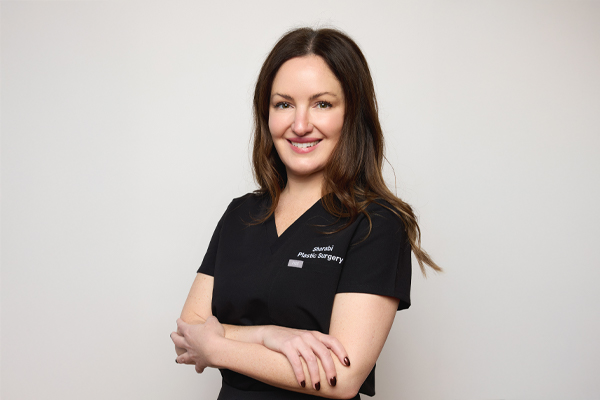
Female Plastic Surgeon
Why Choose a Female Plastic Surgeon for Labiaplasty
Labiaplasty is an intimate and deeply personal procedure, and many patients feel more comfortable working with a female plastic surgeon.
Patients often choose Safa Sharabi, MD because of:
- A more empathetic, listening-based approach
- A deeper understanding of female anatomy and lived experience
- A focus on how patients feel—not just how they look
Dr. Sharabi creates a space where patients feel safe, respected, and fully supported throughout the process—from the first conversation through recovery.
Your Labiaplasty Consultation
Your consultation is not rushed, it’s a dedicated, thoughtful conversation. This is your time to share your concerns, ask questions, and feel heard.
During your consultation, Dr. Sharabi will:
- Take time to understand your goals and experiences
- Perform a careful, respectful evaluation
- Walk you through surgical options and techniques
- Discuss what kind of result is realistic and appropriate for you
Her approach is collaborative. You’ll leave with clarity—not pressure.
How Labiaplasty Is Performed
Labiaplasty is typically performed as an outpatient procedure in a fully accredited surgical setting. Every surgical plan is customized, but commonly used techniques include:
Trim Technique
Removes excess tissue along the outer edge of the labia for a smoother contour.
Wedge Technique
Removes a wedge-shaped portion of tissue while preserving the natural border.
Dr. Sharabi carefully selects the technique based on your anatomy and goals, always prioritizing:
- Natural appearance
- Symmetry and proportion
- Preservation of sensitivity
- Minimal, well-concealed incisions
Recovery After Labiaplasty
Recovery after labiaplasty is typically manageable and well-tolerated.
Most patients experience:
- Mild swelling and soreness in the first week
- Noticeable improvement within 1–2 weeks
- Return to light daily activity within a few days
- Gradual healing over several weeks
You’ll receive detailed guidance to support healing and ensure a smooth recovery process.
Results: What Patients Notice Most
Labiaplasty results are often subtle in appearance—but meaningful in everyday life.
Patients commonly describe:
- Less irritation and discomfort
- Greater ease in movement and exercise
- Improved comfort in clothing
- A sense of confidence and relief
The goal is not transformation—it’s alignment. Feeling more comfortable, more confident, and more at ease in your body.
A Private, Elevated Experience in Santa Monica
Your experience matters just as much as your results.
Dr. Sharabi’s office is a boutique, penthouse setting in Santa Monica designed to feel:
- Calm and private
- Clean and elevated
- Comfortable and welcoming
From your first visit through recovery, every detail is handled with discretion, care, and intention.
Patients can expect a high-touch, personalized experience where they feel supported at every step.
Labiaplasty FAQs
What is labiaplasty?
A tummy tuck is surgery that removes excess abdominal skin and tightens weakened or separated abdominal muscles to create a flatter, firmer midsection.
Who is a good candidate for labiaplasty?
Tummy tuck results are considered long-lasting, especially when you maintain a stable weight and a healthy lifestyle. By sustaining your healthy habits like a continuous diet and exercise, the repaired abdominal muscles stay tight, and the removed skin does not return. While natural aging will continue, most patients enjoy their smoother, firmer contour for many years. Dr. Sharabi will guide you on how to protect and maintain your results long-term.
How long does labiaplasty take?
A tummy tuck can improve the appearance of some stretch marks if they are located on the lower abdomen. Stretch marks above the navel may not be fully removed, but they do often appear smoother and less noticeable once the skin is tightened. If stretch marks are an area of significant concern, be sure to mention them to Dr. Sharabi during your consultation and discuss possible additional treatments to help even out your skin.
What is labiaplasty recovery time?
Yes, many patients experience improvements in posture and a reduction in lower-back discomfort after abdominoplasty. By repairing separated abdominal muscles, the core becomes stronger and more supportive, which can positively influence your alignment and daily comfort.
When can I return to exercise after labiaplasty?
A tummy tuck is not a weight loss surgery. Instead, it is a body contouring procedure designed to remove excess skin and tighten weakened muscles. Ideal candidates are already at or near their goal weight. However, many patients feel more motivated to maintain a healthy lifestyle after surgery because they feel more comfortable and confident.
When can I resume intimacy after labiaplasty?
Tummy tuck scars are strategically placed low on the abdomen, typically below the bikini line, so they can be easily concealed under clothing and swimwear. Over time, scars soften and fade significantly. Dr. Sharabi uses meticulous closure techniques and provides personalized scar-care guidance to help your incision heal as smoothly and discreetly as possible.
Will labiaplasty look natural?
Good candidates are healthy patients with loose abdominal skin, stretched muscles, or contour concerns after pregnancy, weight loss, or aging.
Is labiaplasty painful?
Yes. A tummy tuck can repair diastasis recti, which is the separation of the abdominal muscles often caused by pregnancy or major weight changes.
How much does labiaplasty cost near me or in Santa Monica, CA?
No. Liposuction removes excess fat, while a tummy tuck removes extra skin and tightens abdominal muscles. Some patients combine both procedures.
Will there be visible scars after labiaplasty?
Yes. A tummy tuck can repair diastasis recti, which is the separation of the abdominal muscles often caused by pregnancy or major weight changes.
Can labiaplasty affect sensation?
Tummy tuck cost depends on the extent of surgery, whether liposuction is added, anesthesia, and facility fees. Personalized pricing is usually given during consultation.
What anesthesia is used for labiaplasty?
Tummy tuck recovery time often involves swelling, soreness, walking slightly bent at first, and avoiding strenuous activity for several weeks while healing progresses.
Is labiaplasty the same as vaginal rejuvenation?
Yes. A tummy tuck scar is typically placed low on the abdomen so it can often be hidden beneath underwear or swimwear.
How do I choose a labiaplasty surgeon near me or in Santa Monica?
Tummy tuck results can be long-lasting when patients maintain a stable weight and healthy lifestyle.
What is the next step if I’m considering labiaplasty?
Choose a board-certified plastic surgeon with experience in abdominal contouring, muscle repair, scar placement, and individualized treatment planning.